


Finding Her Place Among the Stars: Emily Bridges’ Journey to NASA

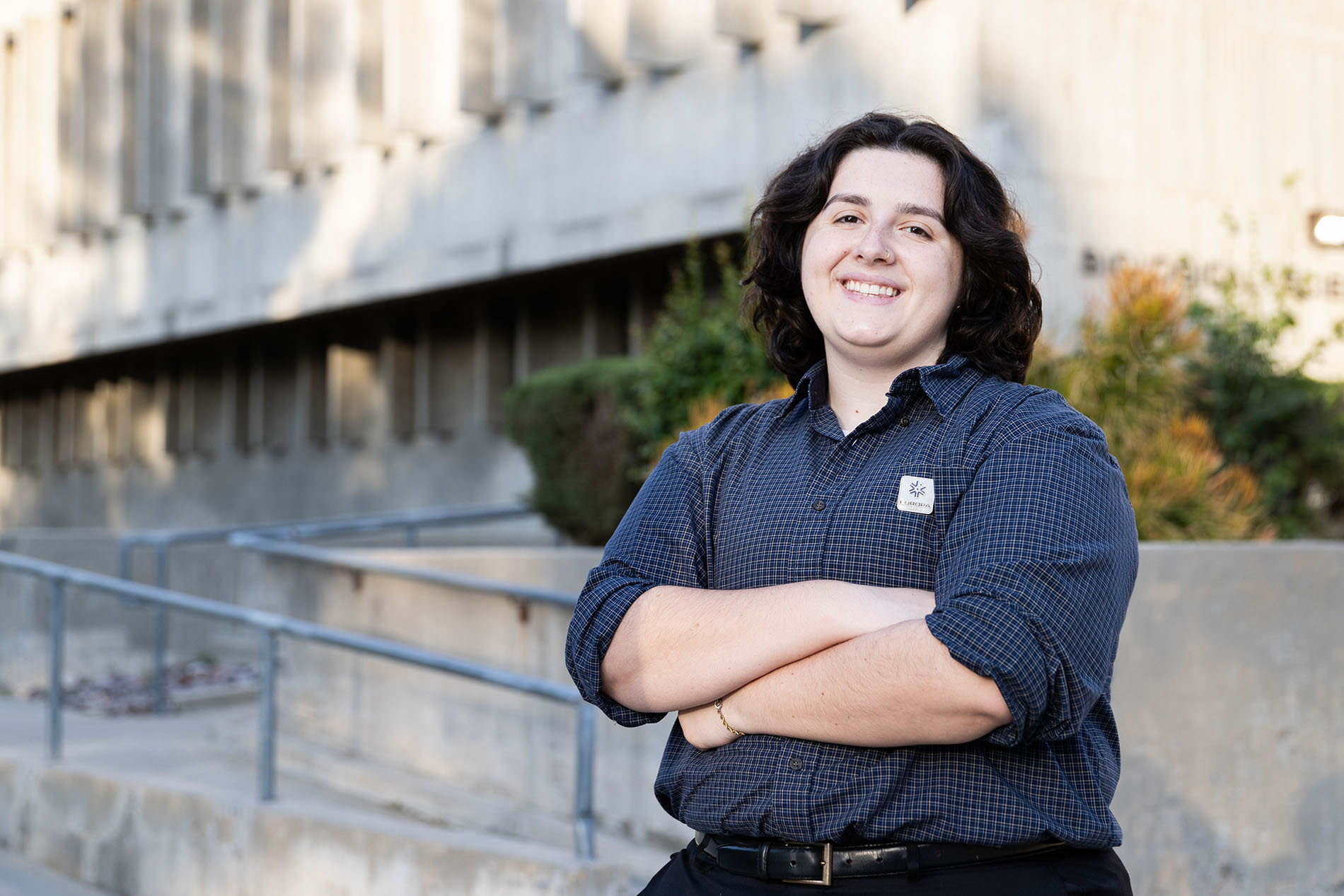
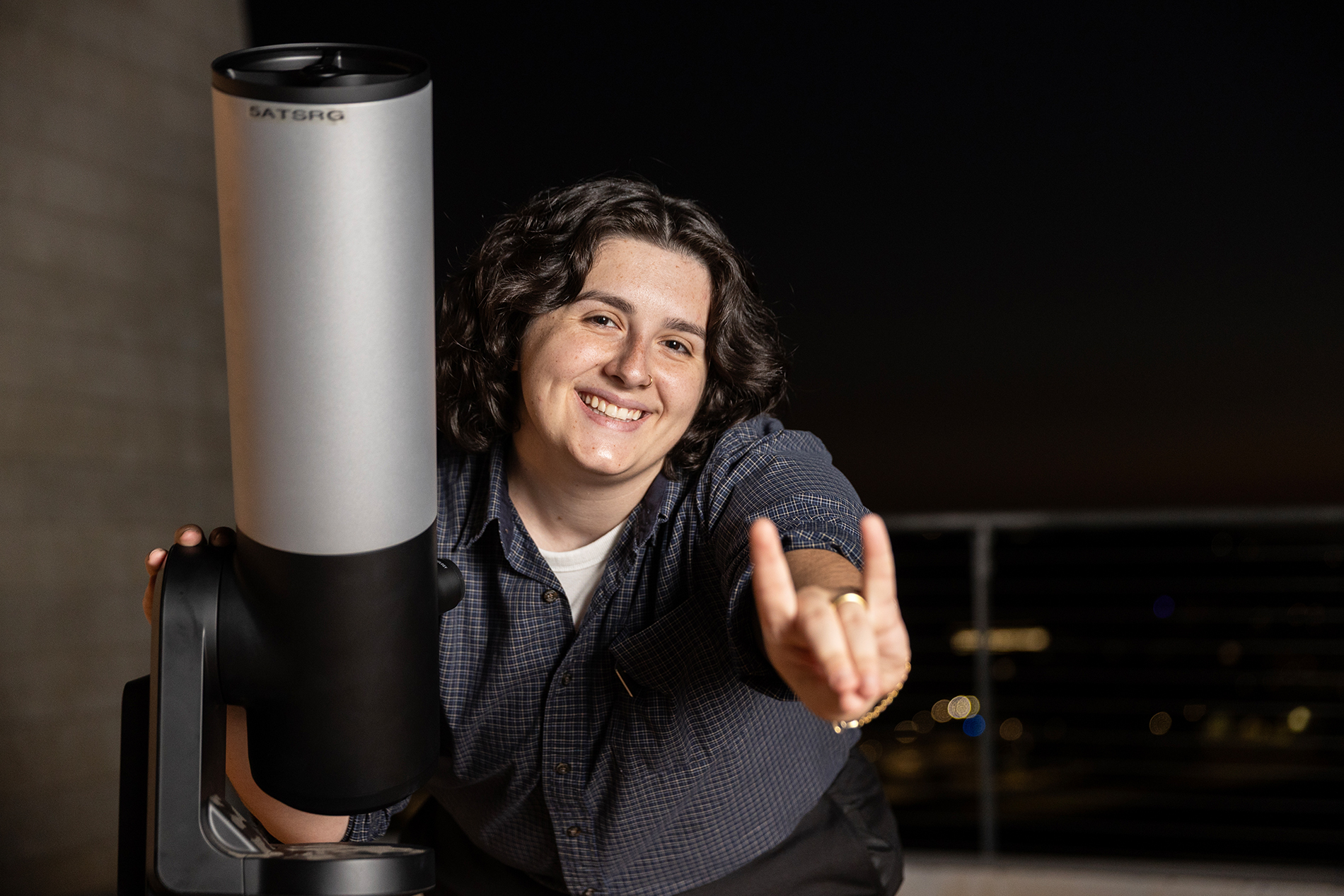
A faculty email helped set CSUSB student Emily Bridges on a path to a NASA internship — but it was her preparation, persistence and passion for geology that ultimately set her apart in a highly competitive applicant pool.
“I first heard about the internship from my professor,” she said, noting that the application process was straightforward, requiring only an application, resume and short written statement.
Selected as one of just 33 interns from 3,500 applicants nationwide — an acceptance rate of less than 1% — Bridges received the news while on campus. Overcome with excitement and disbelief, she called her family — including her grandmother, a CSUSB alumna — to share the moment.
“I was so excited when I saw that email, even though I didn't believe it at first,” said Bridges. “I called my family, especially my grandma, and was on the phone with them for probably two hours outside of the library.”
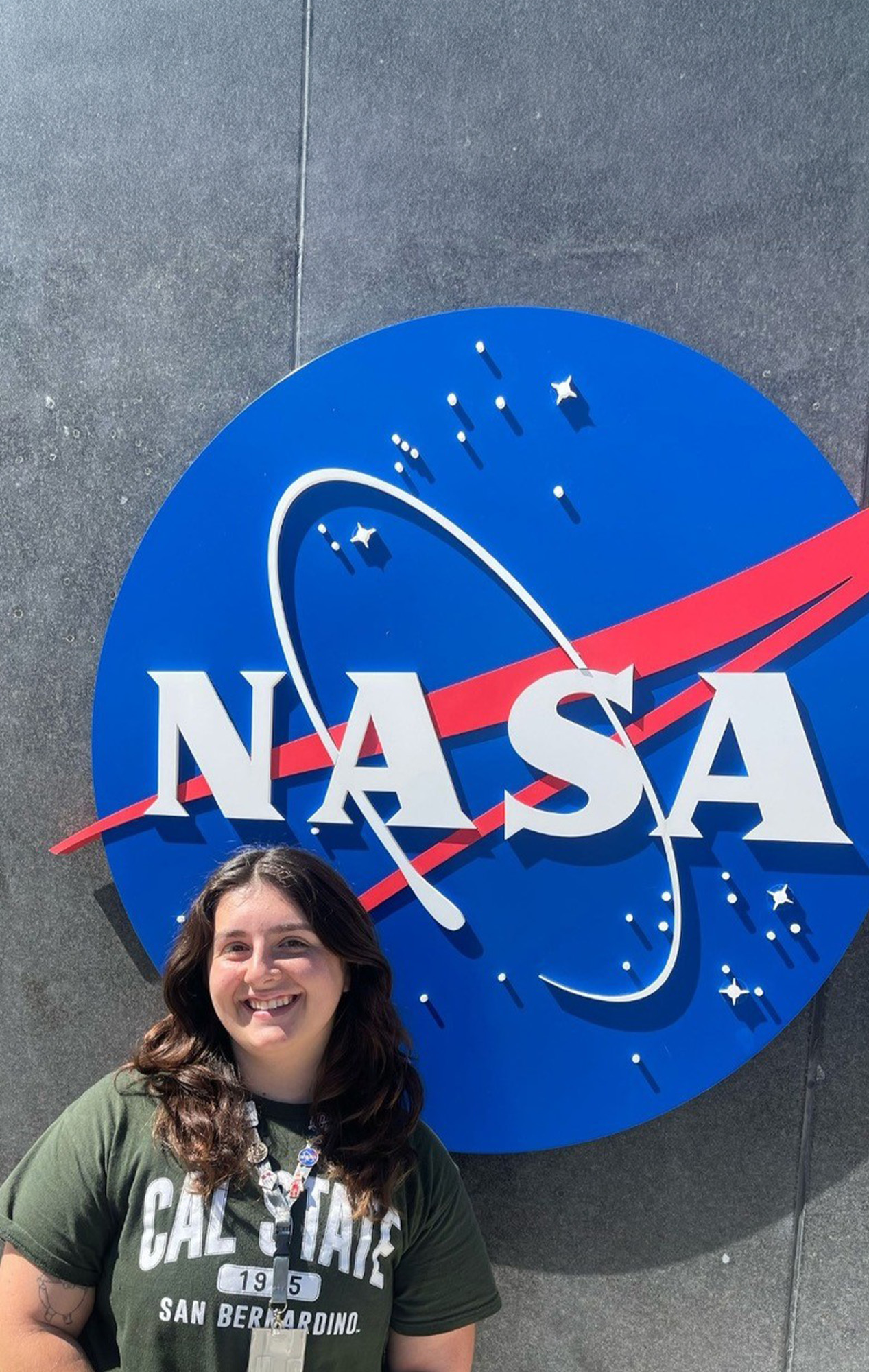
That moment marked the start of her summer internship at NASA’s Jet Propulsion Laboratory (JPL) in Pasadena, Calif., where she contributed to research supporting the Europa Clipper mission, a major NASA initiative aimed at exploring Jupiter’s moon, Europa, and assessing its potential habitability. The laboratory is managed by the California Institute of Technology (Caltech).
Supporting a mission to Europa
Bridges, a geology senior, participated in the 10-week Europa Clipper: Opportunities for Next-Generation Scientists (ICONS) internship, where she was paired with planetary geologist Cynthia Phillips, the mission’s project staff scientist and science communications lead.
Throughout the summer, Bridges conducted original research analyzing high-resolution imagery of Jupiter’s moons, Europa and Io, studying tectonic and surface features and comparing images over time to detect geological change — work that supports the Europa Clipper mission, NASA’s first dedicated to an in-depth study of Europa, where scientists believe a vast salty ocean lies beneath its icy crust.
Bridges engaged with other scientists and researchers at JPL through seminars, collaborative meetings and behind-the-scenes tours of NASA facilities — experiences that deepened her understanding of space exploration and the people behind it.
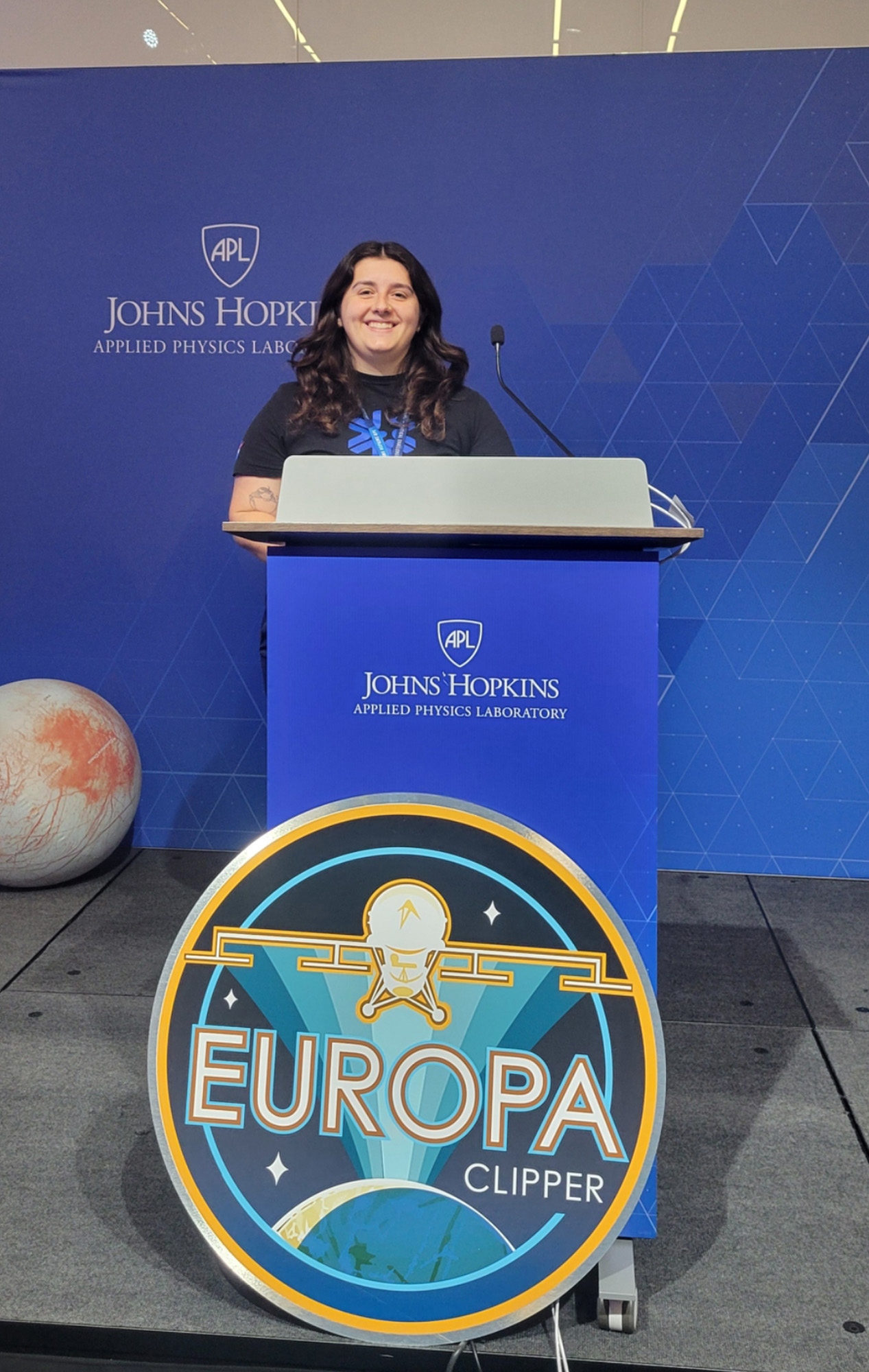
As part of the experience, she also presented her research at the Johns Hopkins University Applied Physics Laboratory in Laurel, Md. Additionally, the internship included a $12,000 stipend, along with travel, relocation support and housing.
Cynthia Phillips, the mission’s project staff scientist and science communications lead
Finding confidence and community
At JPL, Bridges joined a cohort of interns from across the country — including CSUSB alumnus and current student Juan Daniel Gonzalez-Ruiz, a physics graduate now pursuing a master’s in materials science, who analyzed magnetometer data to improve the accuracy of Europa Clipper’s scientific measurements. After applying to 128 internships, he was ultimately selected for the highly competitive program. The two first connected during a virtual orientation and were excited to see another CSUSB student among the select group of interns.
“Both Emily and I were honored and up to the challenge,” said Gonzalez-Ruiz. His experience, like Bridges’, reflects the growing presence of CSUSB students in top tier research programs.
Still, the experience came with moments of uncertainty. Surrounded by students from Ivy League and research-intensive institutions, Bridges initially questioned where she fit and had to overcome imposter syndrome.
Although she initially felt out of place, Bridges said being selected from a highly competitive pool helped her recognize she was capable of the work.
Bridges credits her academic experience at CSUSB for preparing her to step into planetary science research through hands-on coursework, field studies and a multi-semester thesis.
“All of the knowledge that I had learned from geology, I just transferred it over to different surfaces, different bodies in the solar system … So it transfers very well,” she said.
"I was shocked when I found another CSUSB student in my orientation. I remember we exchanged messages in the meeting via zoom. We were both excited and hyping each other up for not only being from the same school, but also being in the same program! Out of the thousands who applied, we were part of the 30ish students who were selected."
Juan Daniel Gonzalez-Ruiz, CSUSB alumnus and
current graduate student
Looking ahead
As she prepares for graduation, Bridges plans to pursue a Ph.D., inspired by her internship experience and mentorship from JPL scientist Phillips, and hopes to deepen her work in planetary science with the goal of returning to NASA to contribute to the Europa Clipper mission. She is also passionate about outreach and teaching the public about science.
Bridges encourages other CSUSB students to make the most of their time at CSUSB by seeking out opportunities, reaching out to professors, building a strong support network and getting involved on campus.
“We’re all so proud of Emily. I hope her success inspires other CSUSB students to just get out there and go for it."
Codi Lazar, CSUSB associate professor
in geological sciences
The support Bridges received from faculty mentors Codi Lazar, associate professor; Tandis Bidgoli, professor; and Clair Todd, chair and professor, in the Department of Geological Sciences helped shape her academic and professional journey.
“All of the professors here are very personable with you, and it feels very much like a family in this department,” said Bridges.
From San Bernardino to NASA’s Jet Propulsion Laboratory, Bridges’ journey demonstrates how CSUSB students are turning classroom learning into real-world impact. With a clear vision for her future, Bridges is ready to make her mark in planetary science.
Cal State San Bernardino, set at the foothills of the beautiful San Bernardino Mountains, is a vibrant hub of education and culture in Inland Southern California. The university offers more than 70 traditional baccalaureate and master’s degree programs, education credential and certificate programs, and a doctoral program, all housed within five academic colleges and the Palm Desert Campus.
Not only is a degree from CSUSB affordable and attainable, it is also a pathway to a brighter future. Ranked No. 2 nationally for social mobility by the Wall Street Journal, CSUSB helps students rise to great opportunities, securing high-paying jobs while keeping costs low.
The university is consistently recognized for its academic excellence, affordability and commitment to empowering students and communities to achieve their fullest potential.
Follow Us
Follow Us